The effect of class on the legal system
In theory, the law of England is blind. In practice, it sees very clearly indeed and what it sees first is your class.
For Royals, Nobility, and much of the Upper Class, the law is rarely an immediate threat, it is a process to be managed. Arrest is uncommon unless the evidence is overwhelming. Police tread carefully, aware that a misstep could end a career. Accusations are often handled discreetly, through private arrangements, influence, or quiet pressure applied behind closed doors.
For the Middle Class, the law is both shield and weapon. They lack the effortless protection of the aristocracy, but they possess something nearly as powerful: access. They can hire solicitors have connections to make use of the law and the money to leverage it.
For the lower classes the law is something encountered suddenly, and often harshly. Most cases are handled in magistrates’ courts for expediency as people cannot afford legal representation, immediate results happen and go one way or another with little recourse.
Women's Rights
English law, particularly common law, traditionally subordinated women to men, especially within marriage. Upon marriage, a woman's legal identity and property rights are merged with her husband's, and she has limited legal standing in matters such as contracts and property ownership. Married women are legally subordinate to their husbands under the doctrine of coverture, which meant they couldn't own property or sign contracts independently.
no bank accounts,
no going in to drinking establishments with out segregation
no marital rape
Women's employment opportunities in England are primarily concentrated in low-paying and often precarious jobs, such as domestic service, textile factories, and teaching. Middle-class women have more limited options, with professions like nursing and teaching being among the few respectable options available.
Meals could be obtained at chop houses, coaching inns, hotels, and coffee houses. None of these were places respectable women are permitted to eat alone, women are expected to eat at home. There are just three restaurants in London for respectable women to eat with out a male chaperone. New and emerging tea rooms are acceptable. Hotels and other eating establishments providing a lady is with a respectable chaperone. Establishments follow social structure in refusing access to parties that would sully the establishments reputation.
Children's Rights
- Can be put to death at any age.
- Boys can marry at 14 and girls at 12 with parental consent. These ages are based on canon law.
- Without parental consent, individuals have to be 21 to marry.
- Children as young as 10 years old can be held criminally responsible for crimes. Below this age, they are presumed incapable of forming criminal intent.
- the minimum working age in factories is 10, and children under 14 are subject to restrictions.
Limited Legal Protections: There are few legal protections specifically designed to safeguard the rights and well-being of children in London.
Child Labour: Child labour is widespread in London, with many children from low-income families working in factories, mines, workshops, and domestic service. These children often face long hours, dangerous working conditions, and minimal pay, with little opportunity for education or personal development.
Social Reform Movements: Despite the challenges faced by children in London, there are nascent social reform movements advocating for improved conditions and rights for children. These movements, led by philanthropists, social activists, and religious organizations, seek to address issues such as child labour, education, and juvenile justice.
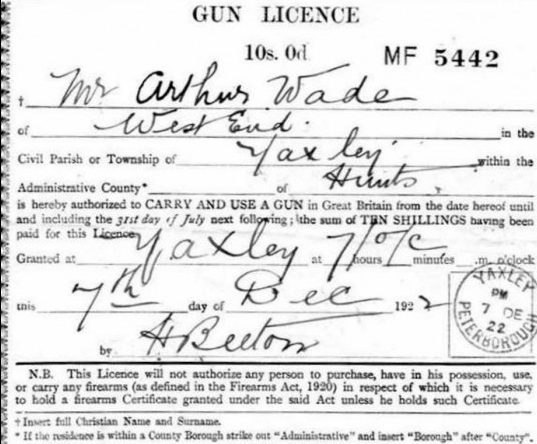
Gun Licence Act 1870:
A the beginning of this year the government introduced a licensing requirement for owning and carrying firearms.
Anyone who owns or carries a firearm (except for some exemptions) has to buy an annual gun license costing 10 shillings. There are presently no checks, no police approval all you have to do is go down your local tax office and pay.
Forfeiture Act of 1870
This abolished forfeiture and corruption of blood, meaning that a person convicted of treason would no longer lose their property automatically, and their family could still inherit. This was a significant change, as it protected the family’s right to retain property and titles even if a relative committed treason.
Contagious Diseases Acts 1864 1866 1869
These Acts allow authorities to detain women suspected of prostitution and subject them to forced medical examinations in the name of controlling venereal disease. They apply only to women and are enforced unevenly often targeting the poor. The system is widely criticised for its intrusive nature and clear class and gender bias making it a powerful tool for social control and potential abuse by authorities.
The Pharmacy Act of 1868
Is a law that regulates the practice of pharmacy in the United Kingdom. It sets standards for the education, training, and practice of pharmacists, as well as the sale and supply of medicines. The act also established the Pharmaceutical Society of Great Britain to oversee the profession and maintain a register of qualified pharmacists.
It restricts sale of poisons (arsenic, opium, etc.)
Sellers must record:
- Name of buyer
- Purpose
- Signature
Factories Act 1867
- Restricted child labour and required part-time schooling for child workers.
- By 1870, children under 10 could not work in factories, and older children had to attend school part-time.- Not really enforced yet
Representation of the People Act 1867:
This legislation, passed in 1867, expanded the electorate by extending the right to vote to a larger portion of the male population in England and Wales. It introduced household suffrage in boroughs, giving the vote to male householders who met certain property qualifications, and it also made provisions for the redistribution of parliamentary seats.
Voting conducted by oral voting or a show of hands district dependant. Selecting the district MP
- All male householders 21 or older (i.e., men who owned or rented property for at least 1 year) paying at least £10 per year in rent could vote providing they paid taxes.
Master and Servant Act 1867
This law governs employment relationships but heavily favours employers. Workers who break employment contracts can face criminal charges including imprisonment while employers are typically limited to civil action. It reinforces class inequality by treating labour disputes as matters of discipline and control rather than mutual agreement.
The Metropolitan Fire Brigade 1866
Creation of the London fire brigade
Larceny Act 1861
This Act defines and standardises crimes of theft including burglary robbery and embezzlement. It forms the backbone of property crime law and is used extensively in everyday cases particularly those involving the lower and working classes. It clarifies distinctions between different types of stealing and sets penalties accordingly.
Malicious Damage Act 1861
This law deals with damage to property whether deliberate or reckless including acts such as arson destruction of machinery and vandalism. It is particularly relevant in industrial areas where sabotage or unrest may lead to the destruction of equipment or buildings. Penalties vary depending on the severity and intent of the damage.
Gun Powder Act 1860
- Private individuals and businesses could only store small, specified amounts of gunpowder on their premises unless they had special authorization.
- storage had to be secured in designated facilities or magazines that met safety requirements, often located outside city centres
- Licensed vendors were also restricted in the amount of gunpowder they could keep on-site, typically around 25 pounds (11 kg) in shops or warehouses
Divorce and Matrimonial Causes Act 1857:
- Made divorce more accessible (for men, in particular) by allowing cases to be tried in civil courts rather than ecclesiastical courts.
- Women faced stricter requirements, needing to prove additional factors like cruelty or desertion alongside adultery.
The Obscene Publications Act of 1857
A wide reaching law often abused by the authorities to pin of those they could not gather other evidence against.
Magistrates could issue a warrant to search premises suspected of containing obscene material.
Authorities could seize books, prints, photographs, or other materials deemed obscene.
Courts could order their destruction.
The Act did not define “obscene,” leaving the term pen to interpretation by courts.
This vagueness made the law both flexible and controversial. Publishers, printers, and sellers could face fines or imprisonment if convicted.
The Fraudulent Mediums Act 1851
Replaces the outdated Witchcraft Act of 1735 It targets people who falsely claim supernatural powers, especially those who pretend to contact the dead for money or personal gain. The law only applies if there is intent to deceive, meaning it protects sincere spiritualists while cracking down on deliberate fraud.
The Gaming Act of 1845
Prohibited the operation of unlicensed gaming houses and casinos. Licensed establishments were subject to strict regulations, including limits on stakes and prizes, and were required to obtain permits from local authorities.
The Poor Law Amendment Act (1834)
Brought in work houses for the poor run and under the charge of each Parrish.
- The Act aimed to eliminate outdoor relief for the able-bodied poor, forcing them to enter workhouses if they needed assistance.
- Work was designed to be harsh with families separated to deter people.
- The Act succeeded in reducing the cost of poor relief in some areas, but its rigid approach led to widespread resentment and protests, especially in rural and industrial regions.
Slavery, abolition of slavery act 1833:
The Slavery Abolition Act of 1833 was a landmark law passed by the British Parliament that officially ended slavery throughout most of the British Empire. It built on earlier abolitionist efforts, including the Slave Trade Act of 1807, which had banned the transatlantic slave trade but did not end slavery itself.
Slavery around the world in the Present day
- United States – Slavery was abolished in 1865 with the 13th Amendment, but many formerly enslaved people are subjected to forced labour through Black Codes and convict leasing.
- Brazil – Slavery is still legal in Brazil.
- Cuba & Puerto Rico (Spanish Colonies) – Slavery persists in Cuba and Puerto Rico under Spanish rule.
- Ottoman Empire – Slavery, particularly in the form of the enslavement of Africans and Circassians, is still present in the Ottoman Empire.
- Africa & the Middle East – Many African and Middle Eastern societies still practice slavery, including in Egypt, Zanzibar, and parts of West and East Africa. The Arab slave trade is still active, supplying slaves to various regions.
- Persian (Qajar) Empire – Slavery was legal in Persia.
- China & Southeast Asia – Forms of slavery, such as debt bondage and human trafficking, still exist in China and Southeast Asia.
Reform Act of 1832
The Reform Act of 1832, also known as the Representation of the People Act 1832, was a pivotal piece of legislation that significantly reformed the electoral system.
- Redistribution of Seats: The Act abolished many "rotten boroughs" and redistributed seats to better reflect the population distribution. For instance, it created seats for industrial towns and cities.
- Expansion of the Franchise: The Act extended the right to vote to a broader segment of the male population, particularly the middle class. It reduced property qualifications, enabling more men, particularly in urban areas, to vote.
- Standardized Voting Qualifications: Voting qualifications were standardized across the country, which introduced uniformity in the electoral process.